
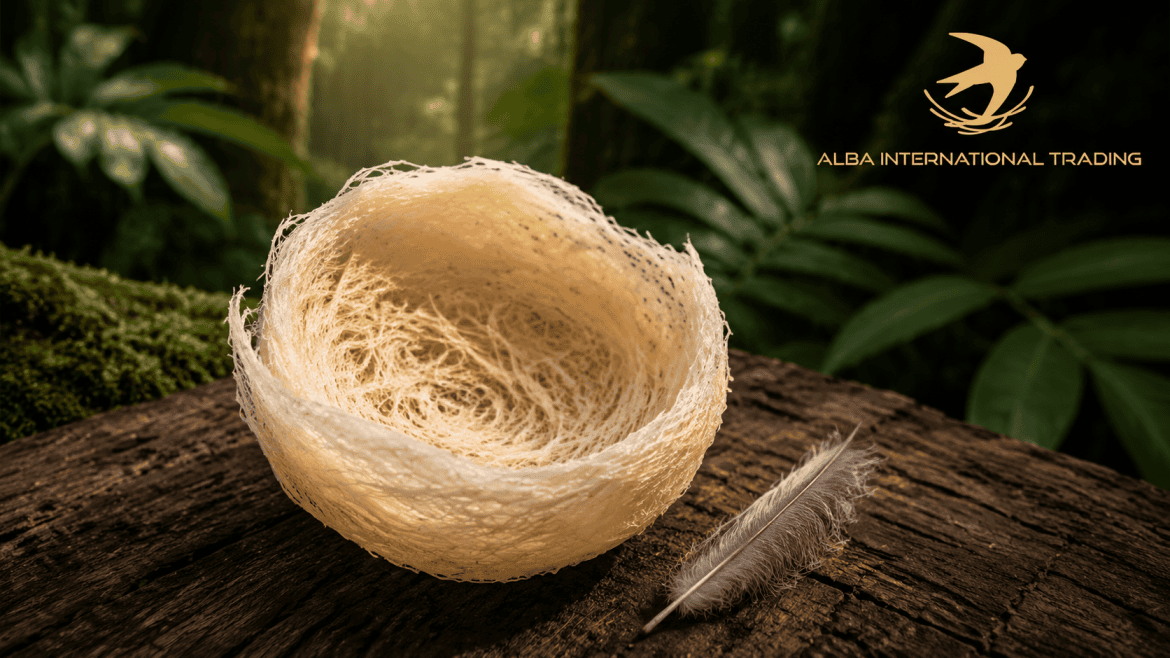
Kalimantan bird’s nest is often singled out by buyers and connoisseurs as one of the most distinctive edible bird’s nests to come out of Indonesia. The reason comes down to geography as much as tradition. Borneo’s ancient rainforest, its river systems, and its humidity levels create a very specific environment for swiftlets, one that shapes the texture, purity, and mineral profile of every nest harvested there.
Edible bird’s nest is built entirely from swiftlet saliva, hardened over weeks into a cup-shaped structure. Because the bird produces this saliva in direct response to its environment, humidity, temperature, insect availability, and mineral content in the air and water, the region where a nest is harvested has a real, measurable effect on the finished product. This is one of the main reasons the trade distinguishes nests by origin rather than treating them as an interchangeable commodity.
Kalimantan offers a particular combination of factors that swiftlets respond well to: dense tropical rainforest cover, consistently high humidity, and a river-fed ecosystem that supports a large, stable insect population. These conditions tend to produce nests with a firmer structure and a cleaner, whiter-to-cream base coloring before processing, which is part of why Kalimantan bird’s nest commands strong interest among buyers who are particular about consistency.