
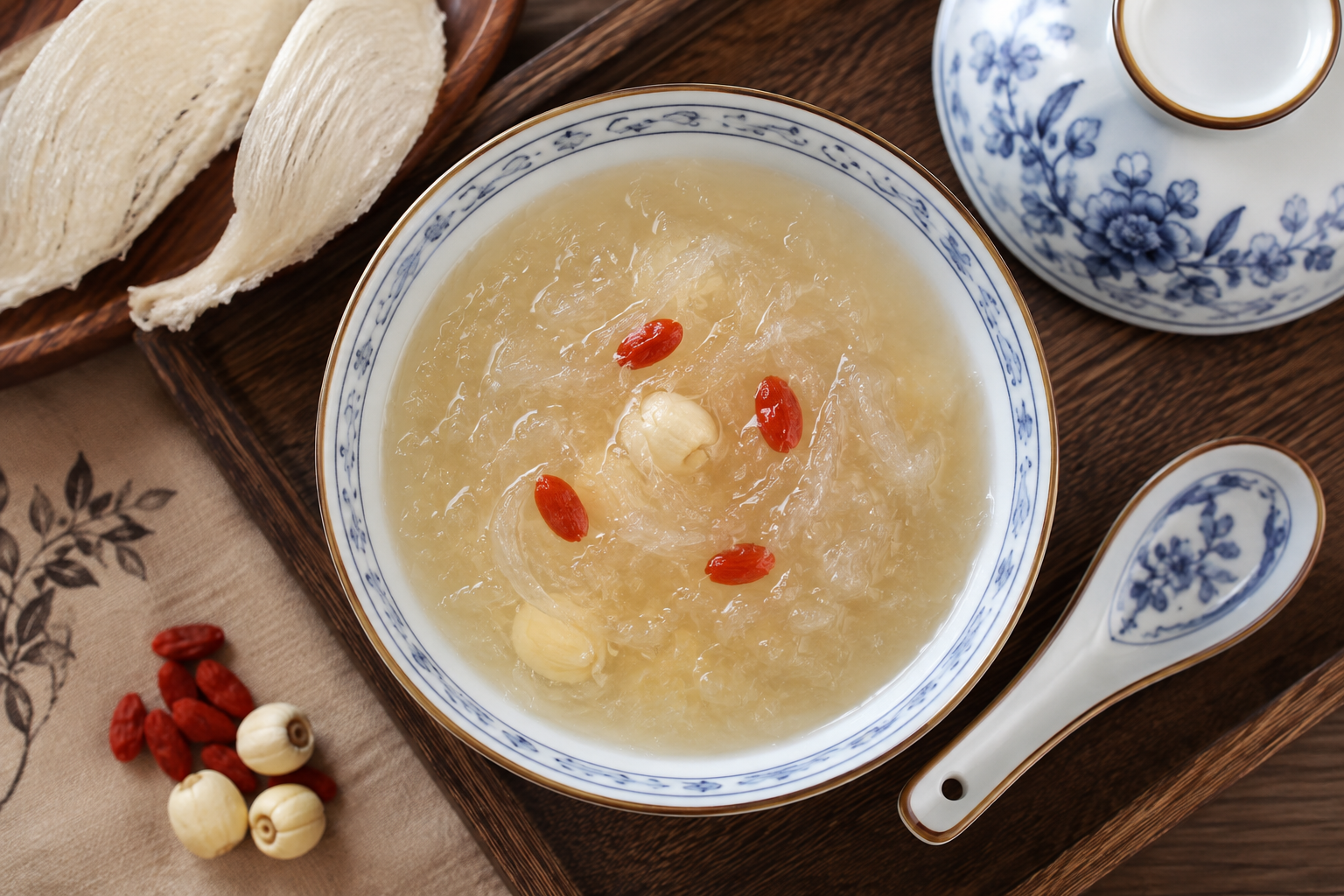
The health benefits of edible bird nest have been valued across Asia for centuries, both as a delicacy and a traditional health tonic. Often called the “caviar of the East,” it was once reserved for emperors and believed to support healthy skin, immunity, and overall vitality.
But how much of that reputation is backed by modern science?
In recent years, researchers have taken a much closer look at edible bird’s nest (EBN). Laboratory studies, animal research, and a growing number of human clinical trials are beginning to explain why it has earned such a longstanding reputation. Some traditional claims are now supported by scientific evidence, while others remain promising but need more research.
This article explores what current studies actually say about the health benefits of edible bird nest, where the evidence is strongest, and where more research is still needed.
What’s Actually in Edible Bird’s Nest?
Edible bird’s nest is made from the hardened saliva of swiftlets. After harvesting, the nests are carefully cleaned before they reach consumers. While that might sound unusual, it’s the nest’s nutritional profile that has attracted scientific attention.
A comprehensive 2025 review published in Discover Food (Springer Nature) identified edible bird’s nest as a rich source of:
- High-quality proteins
- Essential amino acids
- Sialic acid
- Glycoproteins
- Collagen-related compounds
Together, these nutrients have been linked to tissue repair, immune regulation, skin health, digestive support, respiratory function, and healthy ageing — which is where much of the research into the health benefits of edible bird’s nest is currently focused.
One of the most important compounds is sialic acid. It naturally occurs in edible bird’s nest at relatively high levels and plays an important role in brain development, immune function, and healthy cell communication. Researchers have also identified 22 different amino acids across multiple EBN samples, along with minerals including calcium, iron, potassium, and magnesium.
In other words, the nutritional compounds behind edible bird’s nest aren’t marketing claims. They’re well documented and increasingly understood through scientific research.
Immune Support: What We Know So Far
One of the oldest traditional uses of edible bird’s nest is supporting the immune system, particularly during recovery from illness.
Modern research is beginning to explain why.
A 2024 laboratory study published in Veterinary World found that EBN extract increased several important immune antibodies, including IgE, IgA, and IgG3, while also stimulating immune-signalling molecules known as cytokines.
Earlier animal studies reported similar findings. Researchers observed increased activity of B-cells, higher antibody production, and improved secretion of secretory IgA in the intestine, an important part of the body’s natural immune defence.
While these findings are encouraging, it’s important to keep them in perspective.
Most immune research has been conducted in laboratory or animal settings rather than large human clinical trials. That means scientists have identified plausible biological mechanisms, but they cannot yet say with certainty how those effects translate into everyday human health.
Skin and Healthy Ageing: Where the Evidence Is Strongest
Among all the researched benefits, skin health currently has the strongest human evidence.
A 2025 randomised controlled trial, widely considered the highest standard in clinical research, followed 92 healthy women aged between 25 and 45 over a 12-week period.
Participants who consumed higher doses of edible bird’s nest experienced:
- Improved skin moisture
- Better skin elasticity
- Fewer deep wrinkles
- Reduced fine wrinkles
- Smaller areas of pigmentation
Researchers also found reductions in inflammatory markers such as IL-6 and TNF-α, along with lower levels of MMP-1 and MMP-9, enzymes that contribute to collagen breakdown as skin ages.
These findings support what laboratory research has suggested for years: edible bird’s nest appears to help maintain the proteins responsible for firm, healthy skin while reducing inflammation associated with ageing.
Earlier evidence points in the same direction. A double-blind, placebo-controlled study published in Frontiers in Pharmacology found that women taking EBN extract for 12 weeks showed measurable improvements in wrinkles, elasticity, hydration, and overall skin condition compared with the placebo group.
Researchers are also uncovering how these effects occur.
A 2024 review published in the Archives of Dermatological Research concluded that edible bird’s nest helps promote collagen, elastin, and filaggrin production while reducing enzymes that break down skin structure. Other studies have shown that EBN peptides may stimulate genes involved in collagen production and extracellular matrix repair.
Taken together, skin health is currently the area where the health benefits of edible bird’s nest have the strongest and most direct clinical evidence.
Brain and Cognitive Function
Research into brain health is still in its early stages, but much of the interest centres on sialic acid.
Sialic acid is known to play an important role in brain development and the structure of nerve cell membranes. Since edible bird’s nest contains relatively high amounts of this compound, researchers believe it may contribute to cognitive health.
However, there is an important distinction to make.
The biological role of sialic acid itself is well established, but there are currently only limited human studies examining whether consuming edible bird’s nest directly improves memory or cognitive performance. At this stage, the evidence is best described as promising rather than conclusive.
Antioxidant Properties
Another area receiving growing attention is antioxidant activity.
Several reviews have found that edible bird’s nest contains naturally occurring compounds that help reduce oxidative stress and inflammation. These antioxidant effects are believed to contribute to many of the skin-related benefits observed in human studies.
Researchers have also linked these bioactive compounds to anti-inflammatory and healthy ageing pathways, although many of these findings still come from laboratory research.
What the Research Still Can’t Tell Us
Although the evidence continues to grow, there are still important limitations.
Outside of skin health, much of the research has been performed using cell cultures or animal models. These studies are valuable because they help scientists understand how edible bird’s nest works, but they don’t automatically prove the same results will occur in people.
The available human studies are also relatively small, involving dozens of participants rather than hundreds or thousands. In addition, many studies have focused on concentrated extracts instead of traditional bird’s nest prepared as food.
For these reasons, edible bird’s nest should be viewed as a functional food rather than a medical treatment.
Anyone considering it for a specific health condition should speak with a qualified healthcare professional, particularly during pregnancy, while breastfeeding, or when managing an existing medical condition.
How People Traditionally Eat Bird’s Nest
The traditional preparation method has changed very little over time.
The nest is soaked, carefully cleaned, and gently double-boiled before being served. It is commonly enjoyed on its own, in bird’s nest soup with rock sugar, or added to congee and desserts.
More recently, extracts have also been incorporated into skincare products designed to deliver some of the same bioactive compounds directly to the skin.
If you’re preparing bird’s nest yourself, it’s worth following proper soaking and cooking methods to preserve its texture and nutritional quality.
The Bottom Line
Modern research is beginning to catch up with centuries of traditional use, and the health benefits of edible bird nest are increasingly backed by real clinical data rather than folklore alone.
Human clinical trials now provide good evidence that edible bird’s nest can improve skin hydration, elasticity, and visible signs of skin ageing. Laboratory and animal studies also suggest potential benefits for immune function, antioxidant activity, and cognitive health, although these areas still require larger human studies before firm conclusions can be drawn.
Like any natural food, quality matters. How the nest is harvested, cleaned, and processed affects its purity and nutritional profile.
Alba Bird Nest sources directly from Indonesia, the world’s largest producer of edible bird’s nest, with supplies from East Java, Kalimantan, and Sulawesi. Every batch is hand-cleaned without bleach or chemical additives and is supported by FDA and Indonesian Agricultural Quarantine Agency certification, helping ensure the product reflects the natural composition studied in scientific research.
Explore Alba’s certified bird’s nest range → or request a wholesale quote for bulk and export orders.
Medical Disclaimer
This article is provided for general informational purposes only and should not be considered medical advice. Edible bird’s nest is a food product, not a medicine, and is not approved to diagnose, treat, cure, or prevent any disease. Always consult a qualified healthcare professional before using edible bird’s nest to address a health concern, especially if you are pregnant, breastfeeding, or managing a medical condition.