Edible bird’s nest is a nutrient-dense delicacy made from swiftlet saliva, and 2024–2025 clinical research links it to measurable skin hydration gains, collagen support, and immune activity. One trial recorded a 22.14% improvement in skin moisture over the study period. Benefits depend heavily on sourcing: manually cleaned, chemical-free nest retains more of its natural glycoprotein content than bleached or over-processed versions. Most practitioners recommend eating it a few times a week rather than daily.
Edible bird’s nest benefits are backed by more clinical research now than at any other point in the product’s centuries-long history. Recent peer-reviewed studies from 2024 and 2025 are starting to confirm what traditional medicine has claimed for generations: this rare, naturally harvested ingredient is genuinely rich in compounds that support the immune system, skin structure, and overall wellness.
For hundreds of years, edible bird’s nest the hardened saliva nests built by swiftlets has been prized across Asia as a tonic for health, skin, and longevity. This guide breaks down the most well-documented benefits, what the underlying science actually says, and how to use the product correctly, whether you’re new to it or already buy it regularly.
What Is Edible Bird’s Nest, and Why Does It Matter for Health?
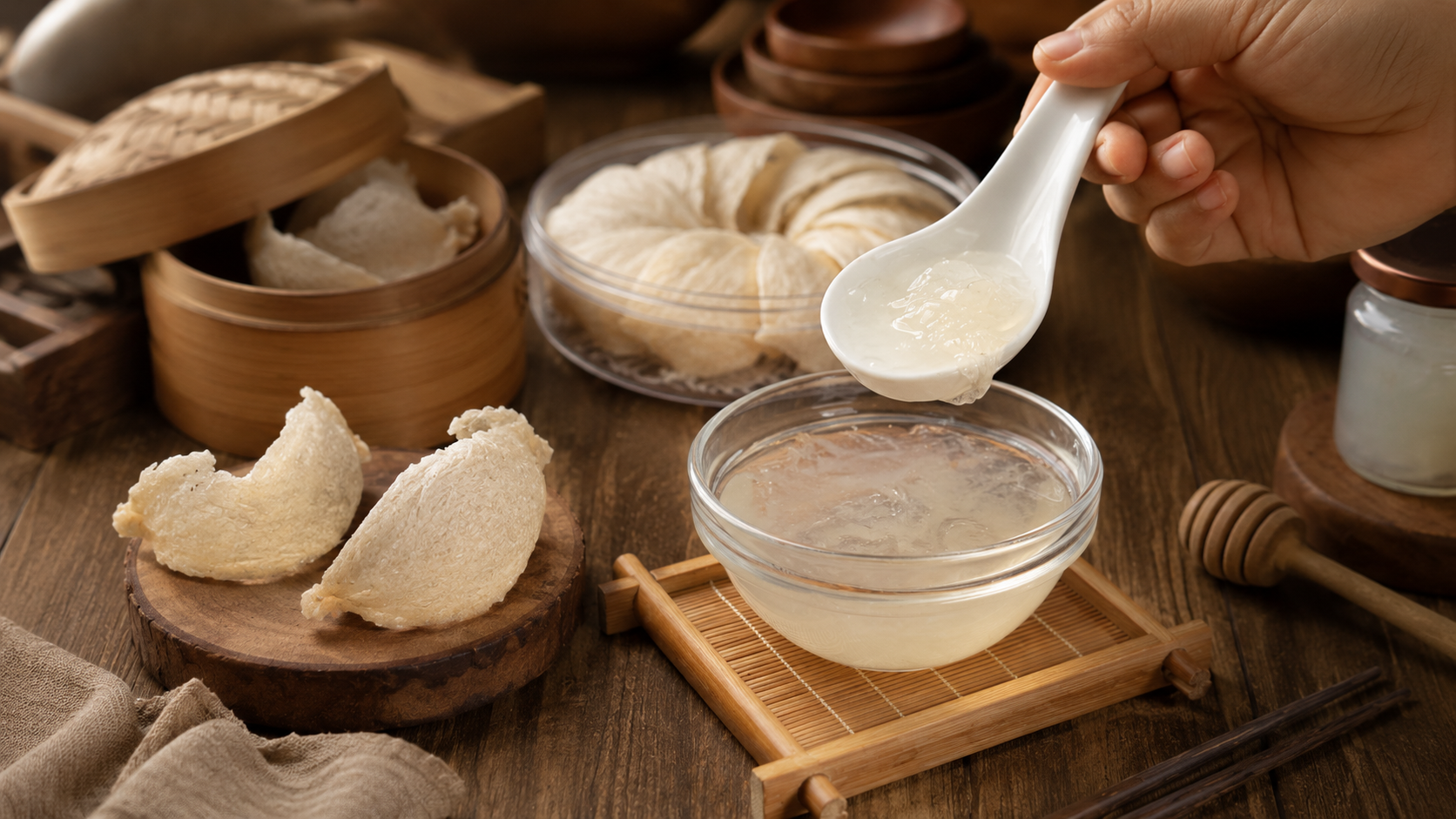
Edible bird’s nest (EBN) is built almost entirely from the solidified saliva of swiftlets, a small swift native to Southeast Asia, including the forests and limestone caves of Indonesia. Unlike most foods, it contains very little fat or sugar; instead, its value comes from a dense concentration of glycoproteins, sialic acid, and essential amino acids.
A 2025 paper published by Springer Nature links these compounds to immune regulation, skin cell repair, and anti-inflammatory activity which is why bird’s nest has remained a staple in Traditional Chinese Medicine and Southeast Asian wellness practices for centuries.
What Does the 2024–2025 Research Say About Bird’s Nest and Skin Hydration?
A randomized controlled trial published in SciOpen in 2025 found that regular consumption of edible bird’s nest improved measurable skin moisture by 22.14% over the study period. Researchers attribute this to the nest’s epidermal growth factor-like activity, which appears to stimulate collagen production and slow visible signs of aging.
This is one of the more specific, quantified outcomes in the beauty-from-within category, and it gives consumers a real number to weigh against other skin-hydration supplements.
Does Bird’s Nest Support Collagen and Skin Structure?
Yes. A 2024 study found that bird’s nest extract supports collagen synthesis and elastin production at the cellular level. For consumers focused on skin elasticity and firmness, this is one of the more clinically grounded claims in the category, rather than a marketing assumption.
Can Bird’s Nest Help the Immune System?
Research compiled by Medical Channel Asia points to bird’s nest’s role in supporting immunoglobulin activity specifically IgE, IgA, IgM, and IgG3, all of which are core markers of immune function. This has made it a popular wellness staple during cold and flu season, as well as during post-illness recovery.
Does Bird’s Nest Protect Skin From UV-Related Damage?
Studies referenced by Medical Channel Asia suggest bird’s nest may help reduce the visible effects of UV exposure on skin. This is one reason it has become popular in beauty-focused wellness routines across Asia, particularly among consumers in their 30s to 50s.
Why Has Bird’s Nest Traditionally Been Used During Pregnancy and Recovery?
Across Chinese and Southeast Asian communities, bird’s nest soup has long been given to pregnant women and new mothers as a confinement tonic, believed to support nutrition during recovery. More clinical research is needed specifically on pregnancy outcomes, but its amino acid and protein profile aligns with general prenatal nutrition needs which is why this remains one of its most culturally enduring uses.
How Does Alba’s Cave-to-Table Sourcing Standard Protect These Benefits?
Not all bird’s nest products deliver the same nutritional value. Quality depends heavily on species (swiftlet versus swallow), harvesting method, and how the nest is cleaned and processed. Indonesia supplies more than 70% of the world’s edible bird’s nest, largely due to its ideal climate and the limestone cave systems and forest habitats including Borneo and Kalimantan — that swiftlets naturally favor.
Bird’s nest that is chemically bleached or over-processed loses much of its natural glycoprotein content, which is one reason the benefits described above are strongest when the nest follows Alba’s manual, chemical-free cleaning process the standard used by FDA- and HACCP-certified Indonesian bird nest exporters.
This is the core idea behind what we call Alba’s Cave-to-Table Sourcing Standard: every nest is traced from harvest location, through manual cleaning without chemical bleaching, to third-party certification, so the glycoprotein and amino acid content that drives these benefits stays intact by the time it reaches the table. In practice, this standard governs three things: which caves and forest habitats the nest is sourced from, how it’s cleaned, and how that process is verified.
Because Alba’s Cave-to-Table Sourcing Standard is built around manual, chemical-free handling, the nest retains more of the compounds referenced in the research above than mass-processed alternatives which is why sourcing, not just consumption, determines how much benefit you actually get from FDA- and HACCP-certified Indonesian bird’s nest.
How Should You Use Edible Bird’s Nest for the Best Results?
Most people consume bird’s nest in one of the following ways:
- Bird’s nest soup — the most traditional preparation, typically simmered with rock sugar or in a savory broth.
- Raw or dried nest — soaked, cleaned, and double-boiled at home for full control over preparation.
- Ready-to-consume bird’s nest supplements — a more convenient option for those who want the benefits without preparation time.
Most wellness practitioners recommend consuming it a few times per week rather than daily, allowing the body to absorb its nutrients consistently over time without overconsumption.
Frequently Asked Questions
Q: What does edible bird’s nest actually do for the body?
A: Research from 2024–2025 links it to improved skin hydration, collagen and elastin support, and immune-related activity through immunoglobulins like IgA and IgG3. It’s not a cure for anything specific, but a nutrient-dense addition to a wellness routine.
Q: How much skin hydration improvement has been shown in studies?
A: A 2025 randomized controlled trial recorded a 22.14% improvement in measurable skin moisture among regular consumers over the study period, attributed to epidermal growth factor-like activity in the nest.
Q: Does the source of the bird’s nest actually matter?
A: Yes. Chemically bleached or over-processed nest loses much of its natural glycoprotein content. Manually cleaned, chemical-free nest from certified processors retains more of the compounds tied to the benefits described in current research.
Q: How often should I eat bird’s nest to see benefits?
A: Most wellness practitioners recommend a few times per week rather than daily, which allows the body to absorb nutrients consistently without overconsumption.
Q: Is it safe to eat bird’s nest during pregnancy?
A: It has a long history of traditional use as a confinement tonic for pregnant women and new mothers in Chinese and Southeast Asian communities. Clinical research specific to pregnancy outcomes is still limited, so it’s worth checking with a healthcare provider before adding it to a prenatal routine.
Q: What’s the difference between raw nest and bird’s nest supplements?
A: Raw or dried nest needs to be soaked, cleaned, and double-boiled at home, giving full control over preparation. Ready-to-consume supplements skip that prep time while aiming to preserve the same nutrient profile.
The Bottom Line
The research is still developing, but the direction is clear: the edible bird’s nest benefits documented in recent studies measurable skin hydration, collagen support, and immune activity make it far more than a traditional remedy. As with any wellness product, sourcing determines how much of that benefit you actually receive, which is the entire premise behind Alba’s Cave-to-Table Sourcing Standard: manual, chemical-free processing from Indonesian caves and forests, verified by FDA and HACCP certification. If you’re choosing edible bird’s nest for its health benefits, start by checking how it was cleaned and certified, not just where it’s sold.